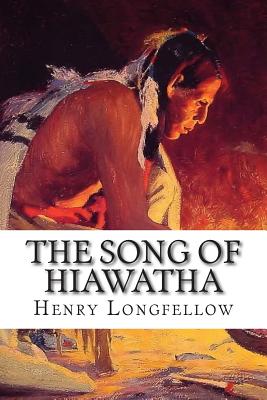
I employed the poetry of Henry Wadsworth Longfellow (1807-1882) as a kind of refrain in my novel Brookhaven. A main character is well known in his family for his lifelong love of Longfellow’s poetry and his ability to recite it from memory.
What I didn’t realize or remember was just how long I’d been reading Longfellow’s poetry myself. That is, until a recent comment on a post at Tweetspeak Poetry popped up.
The comment first arrived as an email. It’s a standard notification that Tweetspeak writers get when someone comments on a post they’ve written. I read it and looked at the date of the post – Oct. 3, 2017, almost nine years ago. Had I actually resumed reading Longfellow that long ago?
The post in question was about Longfellow’s poem The Song of Hiawatha. And the reason I’d read and written about it was an interview with two poets, one of whom had made a comment about the poem, calling it “racially insensitive.”
I decided to read the poem myself. And I learned that the poet who’d made the remark probably hadn’t read the poem, or much of it. It is not racially insensitive. In fact, the epic poem was one of the first, if not the first, to feature a Native American as the hero. In 1855, no one, and I mean no one, considered Native Americans as heroes, in literature or anywhere else. Longfellow was even criticized for doing this by literary critics.
The comment, arriving nine years after the post was published, took me in another direction. A woman briefly described reading the poem with her class in the first year of high school. And she lived in Zimbabwe. It is the first year of high school; the class was twelve- and thirteen-year-olds. She wrote that she never forgot the story that the poem told. And the post made her realize that she needed to read it aloud to her own grandchildren.
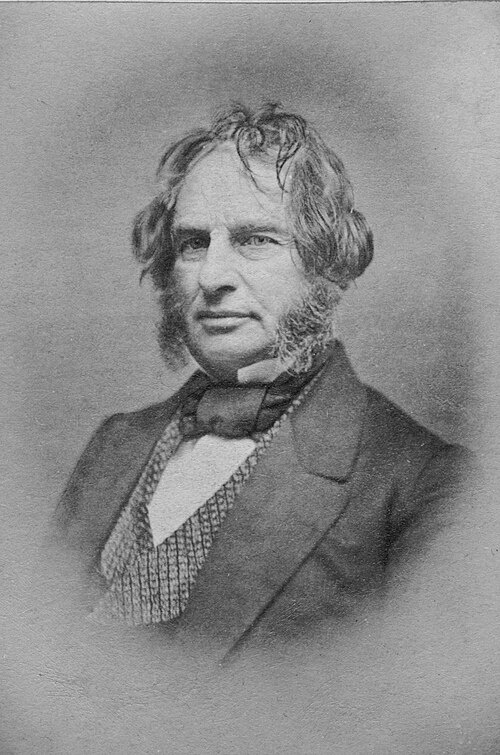
And I wondered, how many American schoolchildren ever study the poem anymore, or even read it? I can remember it from my eighth grade reading class; that year, for whatever reason, reading and English grammar were two separate subjects and classes.
I distinctly remember reading Evangeline, another spic poem by Longfellow about the expulsion of the Acadians from what is now Nova Scotia. Evangeline is part of the folklore of the region where I grew up – southern Louisiana. And it, too, did something in an American poem that hadn’t been done before – it featured a Catholic as the heroine.
And, of course, we read and memorized Longfellow’s The Midnight Ride of Paul Revere, published as one of the poems in Tales of the Wayside Inn in 1863. Not entirely accurate historically, that single poem may have shaped our understanding of the American Revolution more than any other literary endeavor.
Critics at the time might have complained, but the American public loved Longfellow’s poems, making him one of the longest best-selling authors of the 19th century. A personal favorite is The Courtship of Miles Standish, the epic poem about the Pilgrims arrival in America that Longfellow turned into a love story. For me, that long poem is a personal favorite, because my great-grandmother, Octavia Montgomery Young, and the inspiration for the character of Olivia Montgomery in Brookhaven, is a descendant of John Alden and Priscilla Mullins. They were both real people, and both on the Mayflower, and Longfellow made their love story the crux of the great poem.
So, for both Evangeline and The Courtship of Miles Standish, I take my Longfellow rather personally. And the memory of a woman about a high school class in Zimbabwe brings it all back.
Related:
The audiobook version of The Song of Hiawatha, all free on YouTube (almost four hours of listening).
The full text of The Song of Hiawatha.
The Mythic and Heroic: The Song of Hiawatha by Henry Wadsworth Longfellow (at Tweetspeak Poetry).



Leave a Reply